01 / Classic Textbook Recommendation
Classic Textbook Recommendation
Citation
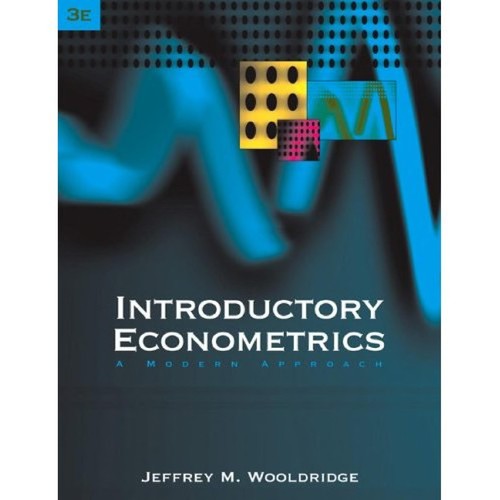
Wooldridge, J. M. (2006). Introductory Econometrics: A Modern Approach (3rd ed.). Thomson/South-Western.
Why It Matters
The economics collection has grown beyond finance, but it still needs a clear route from economic theory to evidence. Econometrics teaches students how to ask whether data can support a causal claim.
Core Ideas
Regression as a Model
A regression is not just a line through points. It states which relationships are being approximated, which variables are held fixed, and which assumptions make interpretation possible.
Causality and Confounding
Correlation can reflect selection, reverse causality, or an omitted common cause. Econometric reasoning makes those threats explicit and searches for designs that separate competing explanations.
Inference and Uncertainty
Samples vary, estimates are imperfect, and statistical significance is not the same as substantive importance. Confidence intervals, tests, and robust standard errors help quantify uncertainty.
Quasi-Experimental Design
Instrumental variables, difference-in-differences, regression discontinuity, and panel methods use institutional details to approximate a comparison that a randomized experiment might have provided.
Reading Lens
Start with a real question, draw the causal graph, identify the comparison needed, and only then choose a regression. Let the design determine the equation rather than the other way around.
Conclusion
Introductory Econometrics gives economics students a disciplined language for evidence. It is the missing bridge between models, policy claims, and the messy data used to evaluate them.