01 / Classic Textbook Recommendation
Classic Textbook Recommendation
Citation
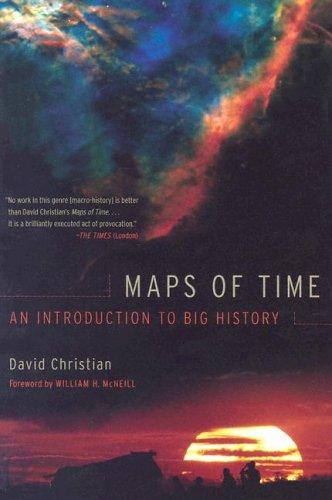
Christian, D. (2004). Maps of Time: An Introduction to Big History. University of California Press.
Why It Matters
Big history stretches the frame of historical explanation. Instead of beginning with written records, Christian follows major transitions from the early universe through Earth systems, life, human evolution, agriculture, and complex societies.
Core Ideas
Thresholds of Complexity
New forms of complexity appear when conditions allow matter, energy, information, and organization to combine. Thresholds provide a way to compare cosmic, biological, and human transitions without claiming they are identical.
Energy and Information
Access to energy and the ability to store and transmit information help explain how societies expand their scale. These are enabling conditions, not complete explanations of human history.
Humans Within Earth History
Human communities depend on planetary systems and also alter them. The framework connects environmental history with political economy and the history of technology.
Scale and Evidence
The larger the timescale, the more historians rely on evidence from geology, astronomy, biology, archaeology, and written sources. Each field has different strengths and limits.
Reading Lens
Track where the book changes scale and how evidence is translated between disciplines. Ask what is gained by the large frame and which local experiences may disappear from view.
Conclusion
Maps of Time gives history a deep temporal and environmental context. It is most useful as a framework that widens historical questions while still requiring careful attention to evidence and human difference.