01 / Classic Textbook Recommendation
Classic Textbook Recommendation
Citation
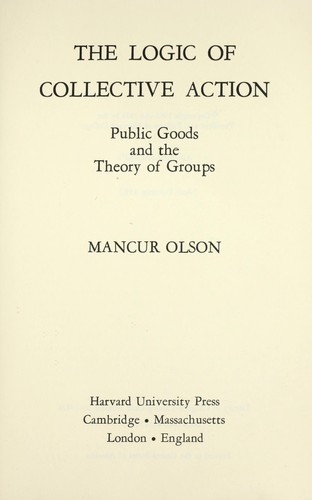
Olson, M. (1971). The Logic of Collective Action: Public Goods and the Theory of Groups. Harvard University Press.
Why It Matters
Shared interests do not automatically produce organized political groups. Olson's account of public goods and free riding provides a durable starting point for understanding lobbying, unions, social movements, firms, and collective provision.
Core Ideas
Public Goods
When a benefit is available to everyone in a group, an individual may prefer to enjoy it without paying the cost of producing it. This creates a gap between group interest and individual incentive.
Free Riding
Large groups often struggle to mobilize because each person's contribution appears small relative to the total cost. Organization therefore requires more than agreement about a goal.
Selective Incentives
Private rewards or penalties can change the calculation. Groups may provide benefits to contributors, restrict access, or build institutions that make participation observable.
Group Size and Power
Small groups can coordinate more easily, while concentrated interests may organize more effectively than diffuse majorities. This helps explain why policy outcomes can diverge from broad public preferences.
Reading Lens
Apply the argument to a concrete case: identify the public good, the costs of contribution, the likely free riders, and the institutions or incentives that make cooperation possible.
Conclusion
The Logic of Collective Action remains central to political science and political economy because it explains organization as a problem of incentives. Its limits are equally useful: later theories can be read as attempts to explain trust, identity, norms, and power beyond the narrow model.