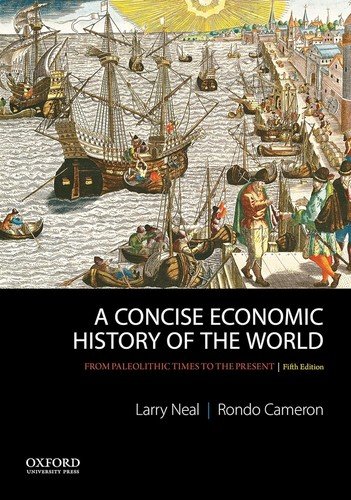
01 / Classic Textbook Recommendation
Classic Textbook Recommendation
Who this book is for
Undergraduates in economic history, world history or development courses who need a coherent long-run narrative, and economics students who want historical context for growth theory. It also suits general readers who want a compact, well-documented account of how the modern world economy came into being and why living standards diverged.
Prerequisites
No economics beyond a principles course is required, though familiarity with basic concepts such as productivity helps.
What it covers
The book moves from prehistoric and ancient economies through medieval Europe and the expansion of trade, then to the early modern period, the Industrial Revolution in Britain and its spread to continental Europe and beyond, and the nineteenth-century world economy. Later parts examine the interwar crisis, the Great Depression, post-war reconstruction, decolonisation and development, and the globalisation of recent decades.
How to use it
Read it in order as a narrative, using the maps, charts and tables to anchor each period. The annotated bibliography for each chapter is a good starting point for essays, and the closing chapters connect well with current debates on globalisation.
Edition and sources
This record describes the fifth edition, published by Oxford University Press in November 2015, with Larry Neal as lead author. Bibliographic data comes from the Campusbokhandeln catalog page, with the Open Library record agreeing.