01 / Classic Textbook Recommendation
Classic Textbook Recommendation
Citation
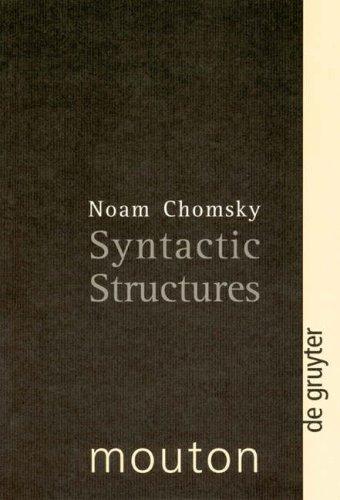
Chomsky, N. (2002). Syntactic Structures (2nd ed.). Mouton de Gruyter.
Why It Matters
Syntactic Structures changed the direction of modern linguistics by treating grammar as a formal system rather than a catalog of correct sentences. Its arguments continue to shape debates about syntax, cognition, and what speakers know about language.
Core Ideas
Finite Rules, Infinite Sentences
A grammar must account for the fact that speakers can understand and produce sentences they have never heard before. The problem turns linguistic creativity into a question about structure.
Phrase Structure
Sentences are not flat strings of words. Hierarchical constituents explain why some sequences behave as units and why transformations can preserve relationships across distance.
Transformations
Transformational rules model relationships between different sentence forms. Whether one accepts the original formalism or not, the book makes explicit what a theory of syntax must explain.
Linguistic Evidence
Judgments about grammaticality are used as evidence about a speaker's tacit knowledge. This invites careful questions about intuitions, variation, and the relationship between data and theory.
Reading Lens
Reconstruct the argument from a small set of examples before evaluating the theory. Ask what each rule explains, what it leaves unexplained, and what assumptions are being made about the speaker's knowledge.
Conclusion
Syntactic Structures is best read as a compact argument about the scientific object of linguistics. Its historical importance lies not only in the specific model, but in the demand that grammar be explained as an organized system.