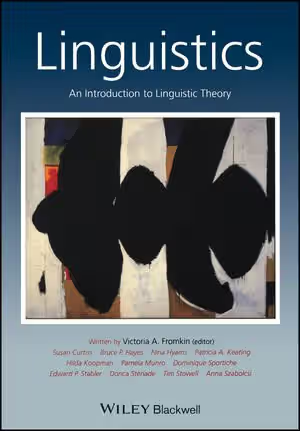
An Introduction to Language
Victoria Fromkin et al.
87 selected books, grouped by course
Compare three books with short trial tasks, follow a six-step reading route, and test your reasoning with worked examples and changed assumptions.
Choose an introductory linguistics book, follow a practical reading route, and test a phoneme analysis with an original worked exercise.
LinguisticsSemantics and PragmaticsCompare semantics and pragmatics texts, then test a report’s truth conditions, cancellable inference and speaker-knowledge assumptions.
LinguisticsPhonetics and PhonologyCompare an open English phonetics route, a cross-language phonetics course and phonological analysis, then test rules on held-out invented forms.
A place to start
Suggested reading compiled by this site for university students and independent learners. This is not an official university reading plan. Check your own syllabus before buying; editions and exercise numbers differ.
Browse all books ↓Begin with an introduction that surveys sounds, word structure, syntax, meaning, acquisition and change. Then follow your course into a subfield such as phonetics, grammar, semantics or bilingualism. Linguistics describes and tests patterns in language; it is not simply a guide to “correct” usage.
Books are grouped by the course they are usually read for, then ordered from introductory to advanced.
Study guides: Start linguistics with evidence: three books and a six-stage route →
Study guides: Speech-sound patterns: description before a phonological rule →
Study guides: Meaning in context: what follows, and what is only suggested →