01 / Classic Textbook Recommendation
Classic Textbook Recommendation
Citation
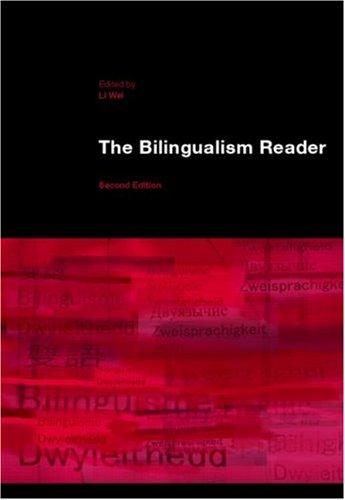
Wei, L. (Ed.). (2007). The Bilingualism Reader (2nd ed.). Routledge.
Why It Matters
Bilingualism is not a single skill or a simple measurement of two languages. The readings in this collection treat it as a social, cognitive, and interactional phenomenon shaped by communities, institutions, histories, and individual repertoires.
Core Ideas
Bilingualism as Practice
Speakers may use different languages for different purposes, with different people, and in different settings. Competence therefore needs to be understood in relation to actual communicative practices.
Language Contact
When languages meet, speakers develop patterns such as borrowing, switching, translation, and hybrid forms. These patterns are systematic rather than random mistakes.
Acquisition and Development
Research on children and adults asks how multiple languages are learned, represented, and used over time. It also challenges the assumption that bilingual development must resemble two separate monolingual paths.
Identity and Policy
Language choices can signal belonging, negotiate power, or resist social expectations. Schools and governments can either support multilingual repertoires or treat them as problems to be corrected.
Reading Lens
For each selection, identify whether the evidence is linguistic, psychological, ethnographic, or policy-based. Compare how each method defines a bilingual speaker and what it can or cannot observe.
Conclusion
The Bilingualism Reader is a useful entry to a field that crosses linguistics and the social sciences. It replaces a narrow question about how many languages someone knows with richer questions about use, context, identity, and power.