01 / Classic Textbook Recommendation
Classic Textbook Recommendation
Citation
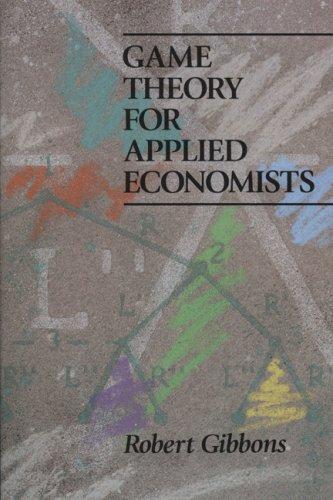
Gibbons, R. (1992). Game Theory for Applied Economists. Princeton University Press.
Why It Matters
Political outcomes often depend on what several actors expect one another to do. Game theory provides a disciplined language for analyzing those strategic situations without assuming that conflict has a single obvious cause.
Core Ideas
Strategic Form
Players, actions, payoffs, and information define a strategic situation. A model becomes useful when these elements are stated clearly enough to compare alternative outcomes.
Equilibrium
Nash equilibrium describes choices that are mutually consistent given what each player expects others to do. It is a solution concept, not a claim that outcomes are fair or socially optimal.
Dynamic Interaction
Extensive-form and repeated games represent sequence, commitment, reputation, punishment, and cooperation. Timing can change incentives even when the available actions stay the same.
Incomplete Information
When players do not know one another's types or payoffs, beliefs become part of the model. Political institutions often work by changing information, signaling, or the cost of coordination.
Reading Lens
Write down the players, timing, information, and payoff assumptions before solving a game. Then ask how the result changes when a realistic assumption about power, learning, or enforcement is added.
Conclusion
Game Theory for Applied Economists is a rigorous bridge into strategic reasoning. Its tools are useful in political science when treated as models of incentives rather than literal descriptions of every human decision.