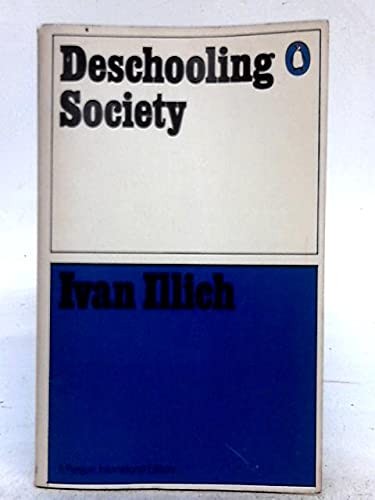
01 / Classic Textbook Recommendation
Classic Textbook Recommendation
Citation
Illich, I. (1971). Deschooling Society. Harper & Row.
Why It Matters
Illich separates learning from the institution of schooling. He argues that schools can turn education into a scarce commodity, reward compliance with institutional pathways, and make credentials appear more important than curiosity or demonstrated ability.
Core Ideas
The Schooling Commodity
When education is delivered mainly through a graded sequence of compulsory services, people may equate learning with attendance, certificates, and consumption of instruction.
Hidden Curriculum
Schools teach more than explicit subjects. They also teach expectations about authority, competition, age grouping, progress, and whose knowledge counts.
Learning Webs
Illich imagines networks that connect people who want to learn, people who can share a skill, and places where tools or materials are available. The proposal shifts attention from delivery to access and agency.
A Critique, Not a Simple Blueprint
The book is deliberately polemical. Its proposals raise difficult questions about equity, safeguarding, expertise, and how public education might remain available without reproducing institutional dependence.
Reading Lens
Distinguish Illich’s criticism of schooling as an institution from a rejection of teaching, knowledge, or organized support. Compare his claims with contemporary work on open education, informal learning, and educational inequality.
Conclusion
Deschooling Society is valuable because it makes the organization of education visible. Even when readers reject parts of Illich’s program, the book encourages them to ask who controls learning and how opportunity is distributed.